 by
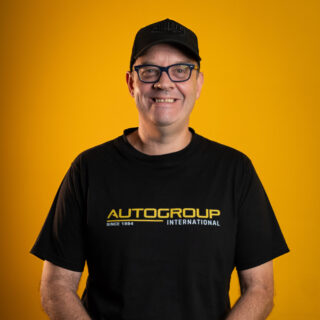
by Written by : Rob Hill
Hi, I’m Rob Hill, CEO of Autogroup International. My father and I have spent our lives around American pickup trucks in Australia, and from experience, most warranty issues aren’t caused by the trucks themselves they come from confusion over who is responsible. When a pickup is converted to right-hand drive, multiple parties can be involved: a dealer selling the vehicle, a third-party converter doing the work, another arranging shipping, and someone else administering the warranty. When problems arise, owners can get caught in the middle of a blame chain. This blog serves as a buyer guide, outlining the test I’d want my own family to follow before placing a deposit.
Why the accountability question matters more than years of warranty
A long warranty sounds reassuring, but the number of years is not the full story. What matters in the real world is who stands behind the warranty and whether they have the capability to support you when something happens.
What matters most:
- Who is the legal entity standing behind the warranty
- Who engineered and manufactured the right hand drive conversion components
- Who has the parts, the diagnostic capability, and the authority to approve repairs
- Who pays the workshop when the job is done
- Who is still operating in three to five years, with the team and the systems to support you
There is a big difference between an American truck dealer and a right hand drive remanufacturer
A dealer is primarily a retail business. They buy and sell vehicles. Some dealers are excellent at sales and customer experience. But most do not own an engineering department, a manufacturing facility, a dedicated procurement team, or a controlled quality system designed around right hand drive remanufacturing.
A right hand drive remanufacturer is different. The core capability is engineering, production, quality control, parts supply, and long-term support. It is a manufacturing and compliance-led business, not a showroom.
That difference becomes obvious the moment a vehicle needs technical support, parts, accessories fitted or a warranty decision. Over the past 33+ years of leading the industry in Australia – we have learned that the only way to operate is directly with our customers.
We do not have dealers. If you want to buy a right hand drive American Pickup Truck, SUV or Muscle car from Autogroup International in Australia – you can only buy it directly from Autogroup. No dealers or third parties. Direct relationships, lower costs (we remove dealer margins and pass them on to our clients), no confusion with warranty and you always are talking to the experts.
The Accountability Test: 10 questions every buyer should ask
Use these questions before you place a deposit. If you cannot get a clear answer in writing, treat it as a warning sign.
- Who is the legal entity providing the warranty? Is it APRA regulated? Ask for the exact business name on the warranty terms, and the ABN or ACN.
- Who performed the right hand drive conversion work? Ask whether it was performed in-house or outsourced to a third party. Is it ISO Quality Assured?
- Who designed and owns the engineering documentation? Engineering ownership enables consistent parts manufacture and repeatable repair outcomes.
- Who holds and controls the parts supply? Where are parts stocked, and what is held locally versus sourced on demand?
- Who has the diagnostic capability and technical escalation? Modern American pickups are complex and workshops need structured support.
- Who approves repairs and who pays the workshop? Ask how repair approval works, how the authorised repairer is chosen, and whether the warrantor pays the workshop directly.
- What is included and excluded, in plain English? Ask for a short list of inclusions and exclusions, and whether conversion components are covered.
- What happens if the seller stops selling trucks? Ask what support looks like if the seller’s retail operation changes direction. Or the ‘dealer’ swaps from one conversion company to another? This sadly happens very often!
- How do they prove capability, not just claims? Ask for evidence of controlled processes, traceability, and documented production controls.
- Can you visit the operation that does the work? A genuine manufacturing operation can be visited such as Autogroup Internationals world-class manufacturing facility.
What single-point accountability looks like in practice
At Autogroup International, our model is simple. We are not a dealer selling someone else’s conversion. We engineer, remanufacture, and support right hand drive American pickup trucks as a controlled manufacturing business.
That matters because it removes the blame chain. One organisation is accountable for the conversion engineering and manufacturing, quality assurance and process control, parts sourcing and warehousing, warranty approvals and repair support, and coordination with authorised service partners across Australia.
Scale matters here. With around 250 employees globally, we have dedicated teams for procurement, international logistics, quality assurance, ISO systems, engineering, and parts operations. That depth is what turns a warranty into real support when you need it.
The red flags that should make you slow down
Here are common signals that accountability may be unclear:
- Warranty terms that do not state the legal entity backing the warranty
- The business selling the truck cannot explain who converted it
- The business selling the truck didn’t actually convert it
- No evidence of parts stockholding and no warehousing footprint
- Vague statements about years of experience without clarity on business continuity
- A claims process that relies on send us a quote and we’ll see
- No technical escalation pathway for workshops
- Reluctance to provide documentation or allow operational transparency
The simplest way to buy safely
In 2026, the safest way to buy an American pickup truck converted to right hand drive is to treat it like you would any long-term asset: confirm accountability, confirm parts and service capability, confirm process maturity and continuity, and confirm what happens if the business changes direction.
If the answers are clear, your ownership experience will usually be clear too.
Buyers Takeaway
When buying a right-hand drive American pickup truck in Australia, the most important factor is accountability, not just the number of warranty years. US factory warranties do not apply once trucks are converted, and confusion often arises when multiple parties—dealers, converters, shippers, or warranty administrators—are involved. Buyers should focus on who legally stands behind the warranty, who engineered and manufactured the conversion components, who holds parts and technical capability, and who pays for authorized repairs. A right-hand drive remanufacturer, like Autogroup International, is different from a dealer: they engineer, convert, manage quality control, stock parts, and provide long-term support directly, removing the “blame chain.” Before placing a deposit, ask clear questions about legal entity, ISO quality assurance, parts supply, repair authorization, coverage inclusions/exclusions, business continuity, and operational transparency. Clear answers ensure a reliable warranty and a smooth ownership experience, while vague or missing information is a red flag to slow down.
FAQs
1) What is the difference between a dealer and a right hand drive remanufacturer?
A dealer sells vehicles converted by someone else. A remanufacturer engineers, manufactures, and supports the right hand drive conversion as a controlled production system, then stands behind it long-term.
2) If a dealer sells the truck, who is responsible for the conversion?
It depends on who performed the conversion work and who is named as the warranty provider. Ask for this in writing before you pay a deposit, however this always becomes complex especially if the dealer supplied the original truck and a third party did the right hand drive conversion.
3) Why does engineering documentation matter?
Because it enables consistent manufacturing, repeatable repairs, and long-term parts supply. Without it, support can become ad hoc. This is referred to Conformity of Production, and with Autogroup International this means we can still re-manufacture a component made 10+ years ago for our clients.
4) Do I need to service at the selling dealer to keep warranty valid?
A strong support system should allow practical servicing options across Australia, with correct record keeping and approved parts.
5) Who approves warranty repairs?
The warranty provider should have a clear approval process and a technical escalation pathway for the workshop.
6) Who pays the workshop for warranty work?
Ask whether the warranty provider pays repairers directly and how that process works.
7) How can I verify who owns the company?
Request the legal entity name and check the ABN or ACN publicly. Transparency matters.
8) What should I ask about parts?
Where parts are stocked, what is held locally, how urgent parts are sourced, and what the escalation process is if an uncommon item is needed. And how big is their spare parts operation and warehouses plus what in-house logistics teams do they have.
9) Why do owners worry about no factory backing?
Because many exported vehicles do not have the same local factory support structure as mass-market Australian vehicles. That’s why the local warranty and support system is critical.
10) What is the biggest risk in an outsourced conversion chain?
Split responsibility. If the seller and converter are different entities, clarity is essential, so owners are not caught between parties. This becomes critical if the dealer is supplying the original vehicle from North America and a third party is doing the conversion.
11) Can I visit the facility that does the work?
You should be able to visit a genuine manufacturing operation or at least see evidence of controlled production. A site visit or recent YouTube videos can tell you all you need to know. Do you really want your brand new $200,000 American pickup truck converted in a shed with 10-20 people working for the company?
12) What should be included with the vehicle at handover?
Clear warranty terms, service guidance, and the information needed for ongoing support and parts supply.